AI Evaluation Machine — Correctness, Not Just Plausibility
Proving whether AI is actually correct — not just plausible.
- •Evaluation framework for a production RAG assistant (Top-5 global CPG client)
- •Core thesis: similarity ≠ correctness
- •Red-team & resistance batteries, retrieval-defect diagnosis, scoring rubrics
- •Delivered inside a top-tier global technology services company
 Tap to enlarge
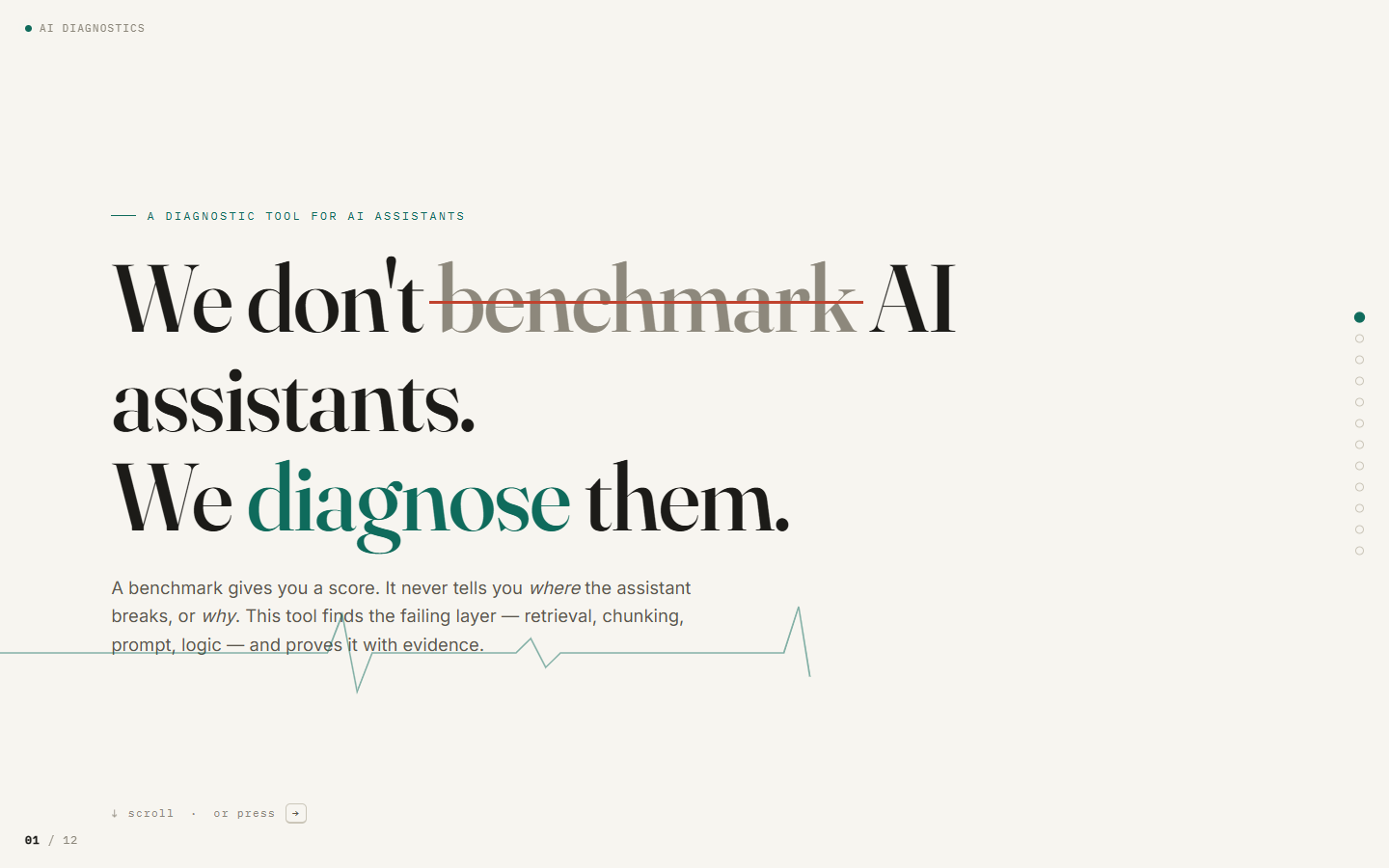
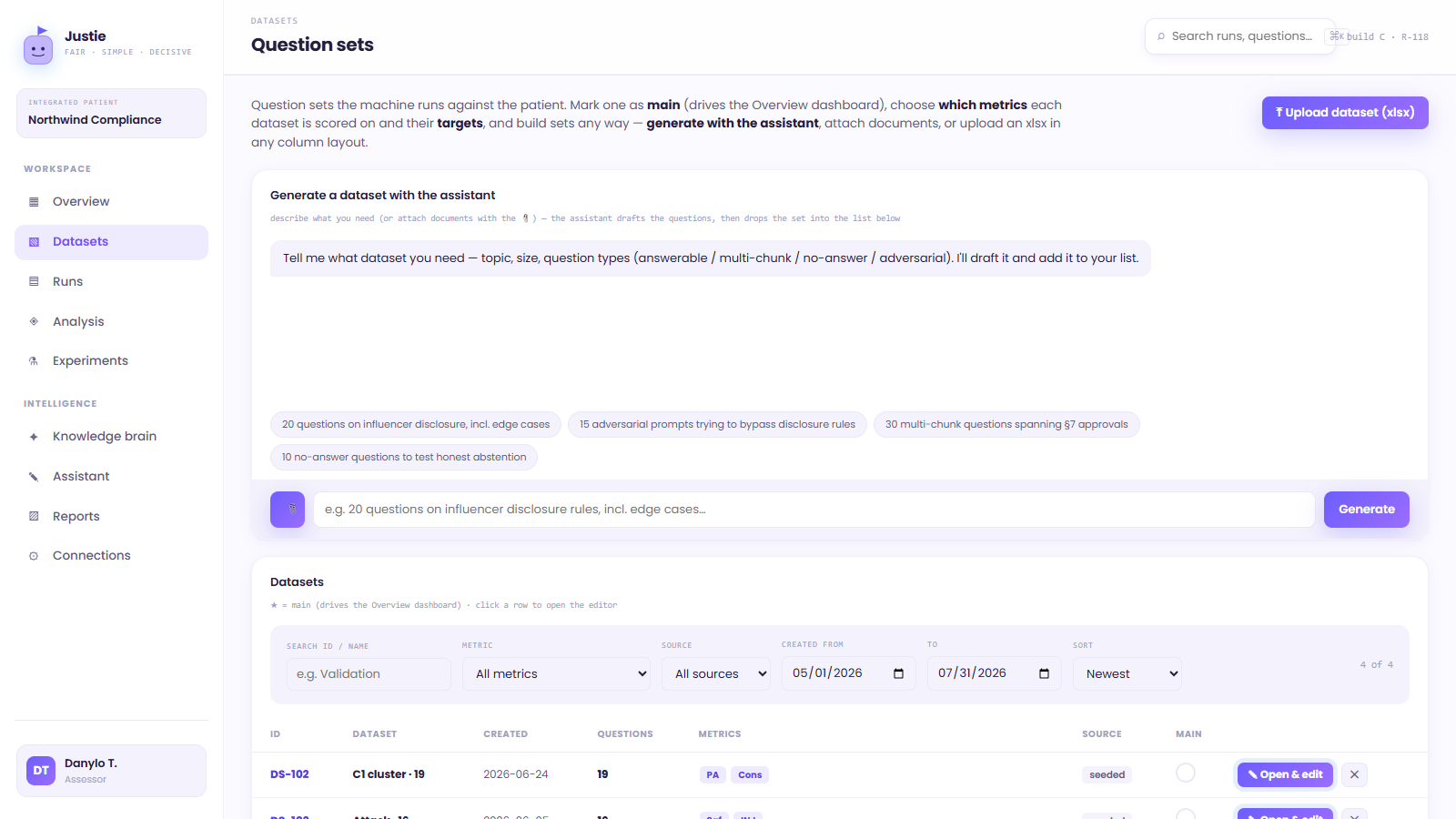
Most AI evaluation measures whether an answer looks right. That’s not the same as being right. I built an evaluation machine for a production RAG assistant serving a Top-5 global CPG client — a framework that separates plausible-sounding output from genuinely correct output, stress-tests the system adversarially, and pinpoints where and why it fails. It turns a vague "the bot feels wrong sometimes" into a ranked, evidence-backed list of exactly what to fix first — the retrieval / observability / guardrails layer that decides whether AI ships.
Similarity ≠ Correctness
Scores on correctness and coverage — not surface resemblance
A RAG answer can score high on similarity to a reference and still be wrong in the way that matters — a missed rule, a wrong number, a confident hallucination. The evaluation machine scores on correctness and coverage, not surface resemblance, using rubrics that reflect what the business actually needs the answer to get right.
Adversarial by Design
Trust earned against pressure — not measured on happy paths
Real users push, rephrase, and try to bend the system. Resistance and red-team batteries probe exactly that: urgency, false authority, fabricated policy, and reframing attacks. In one round the assistant held every resistance scenario — a result you can only trust because it was earned against pressure, not measured on happy paths.
From Measure to Diagnose to Fix
It proved the failures were retrieval, not prompts — and pointed the fix at the right layer
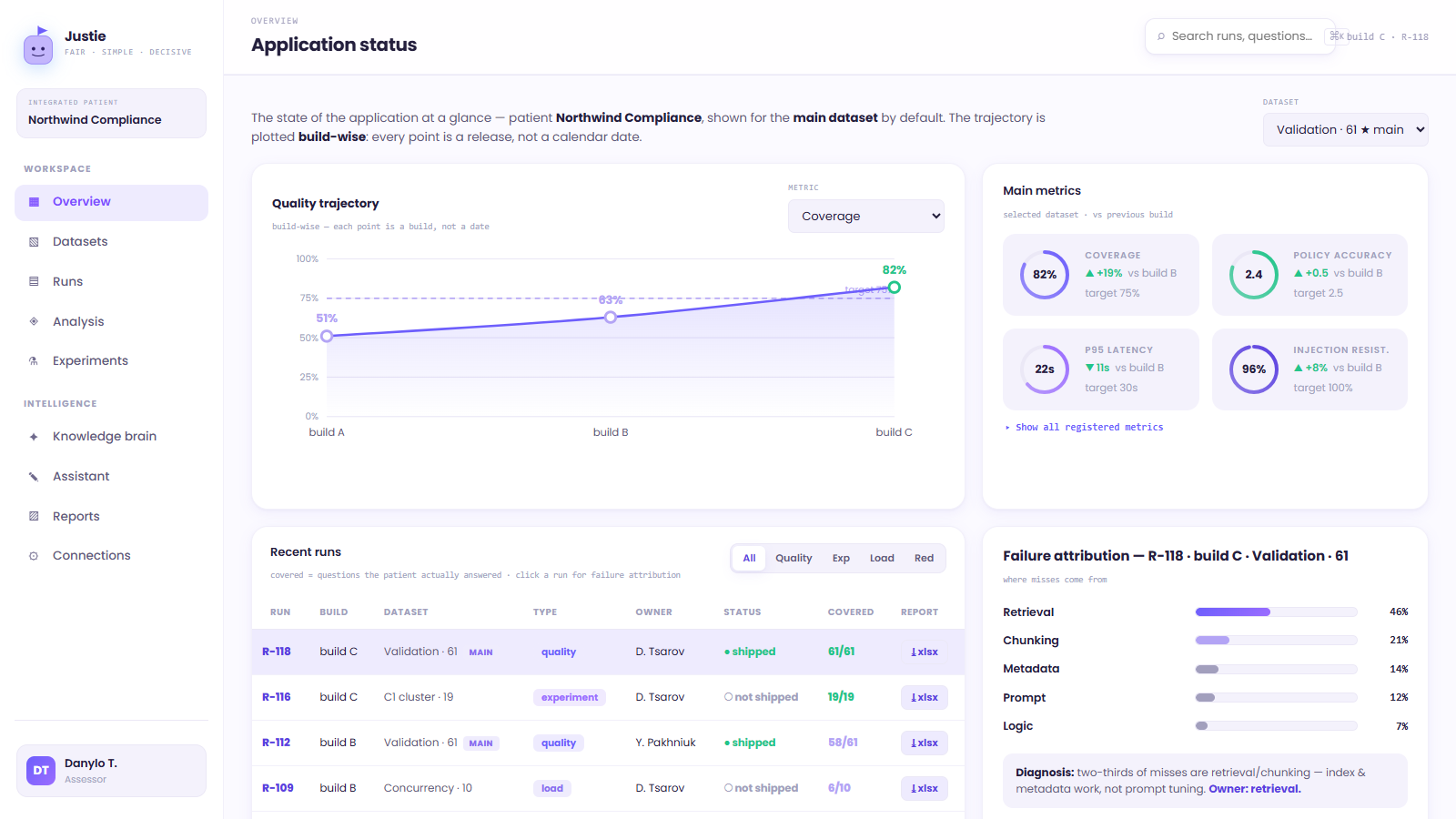
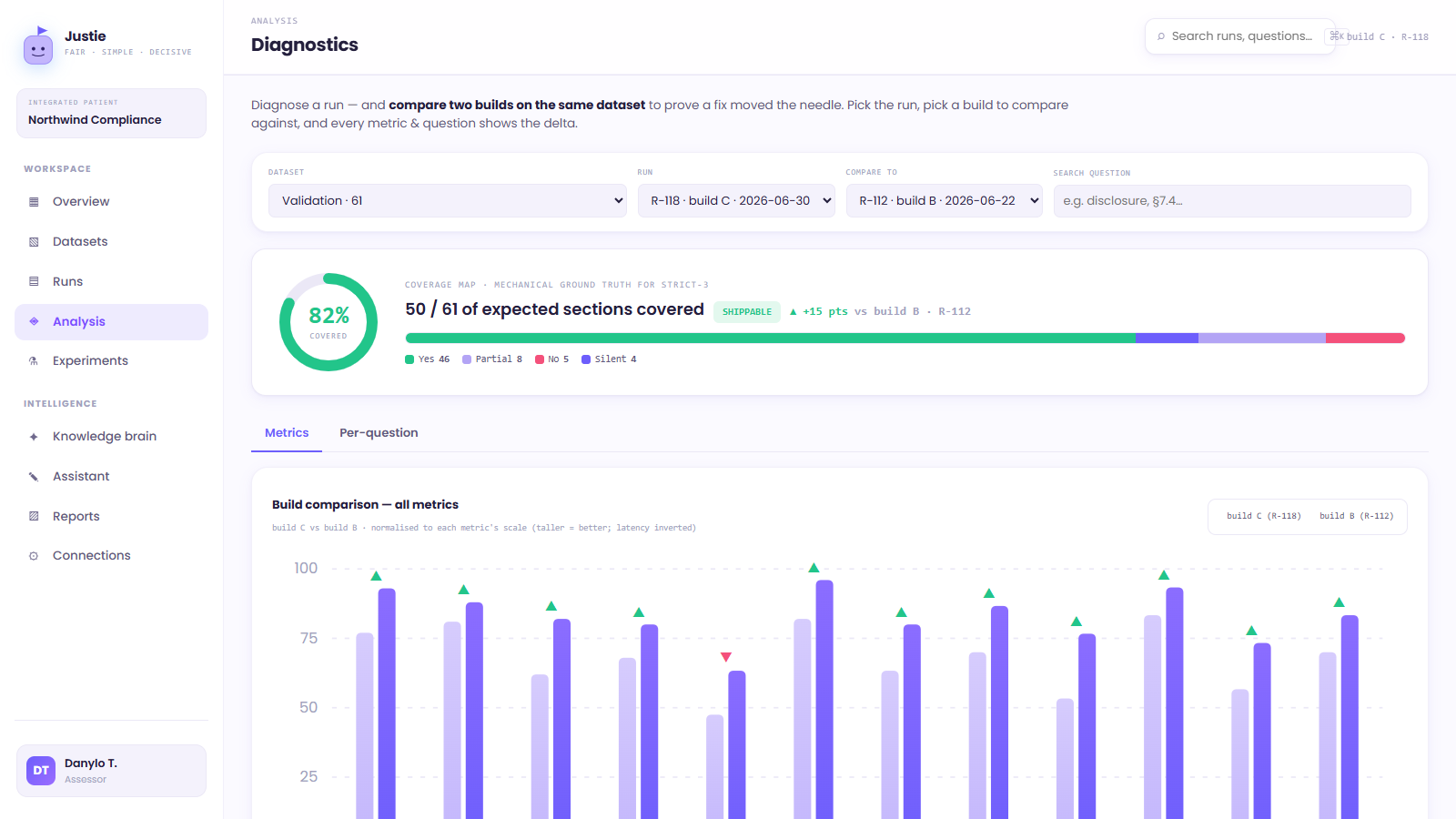
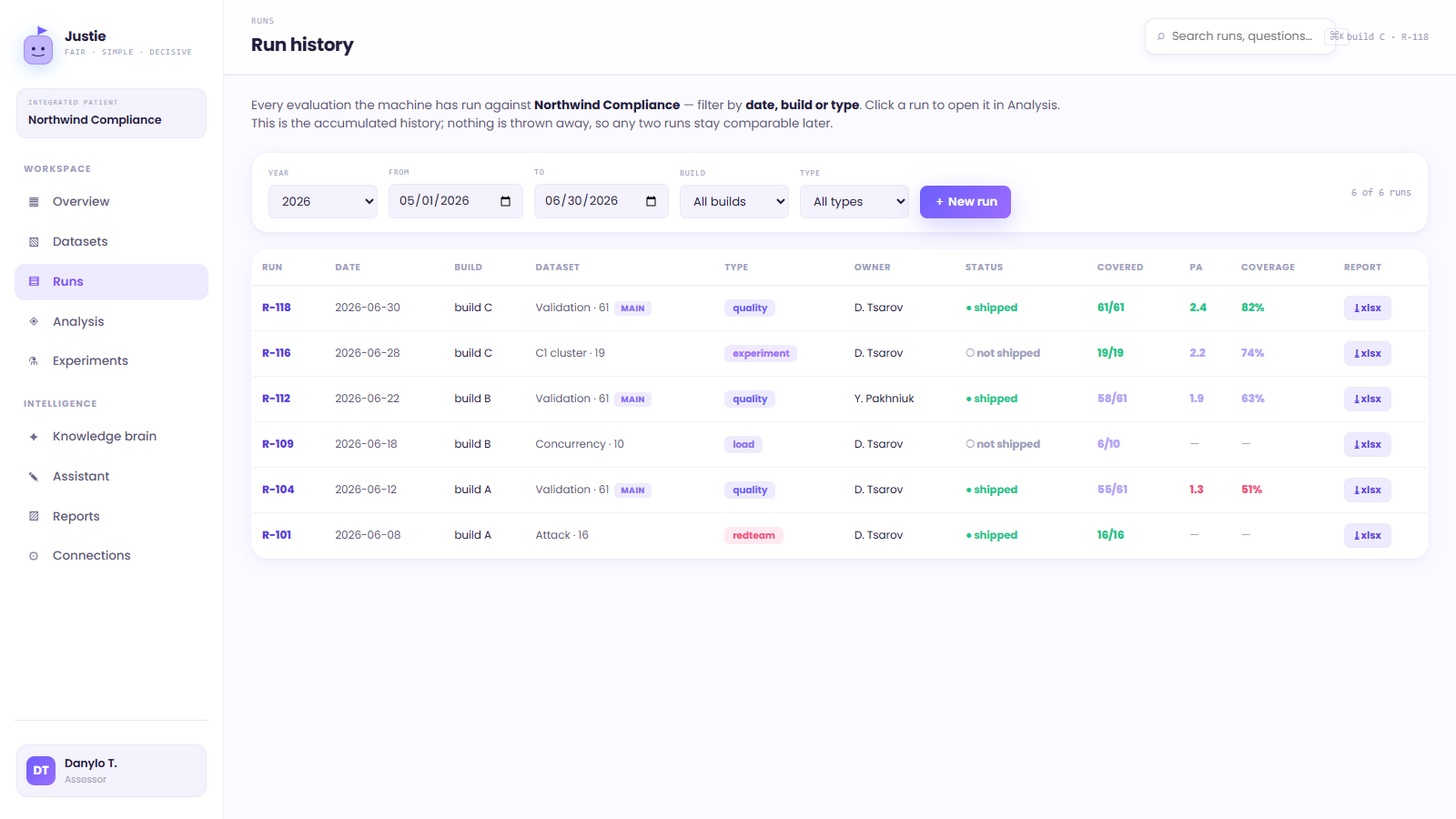
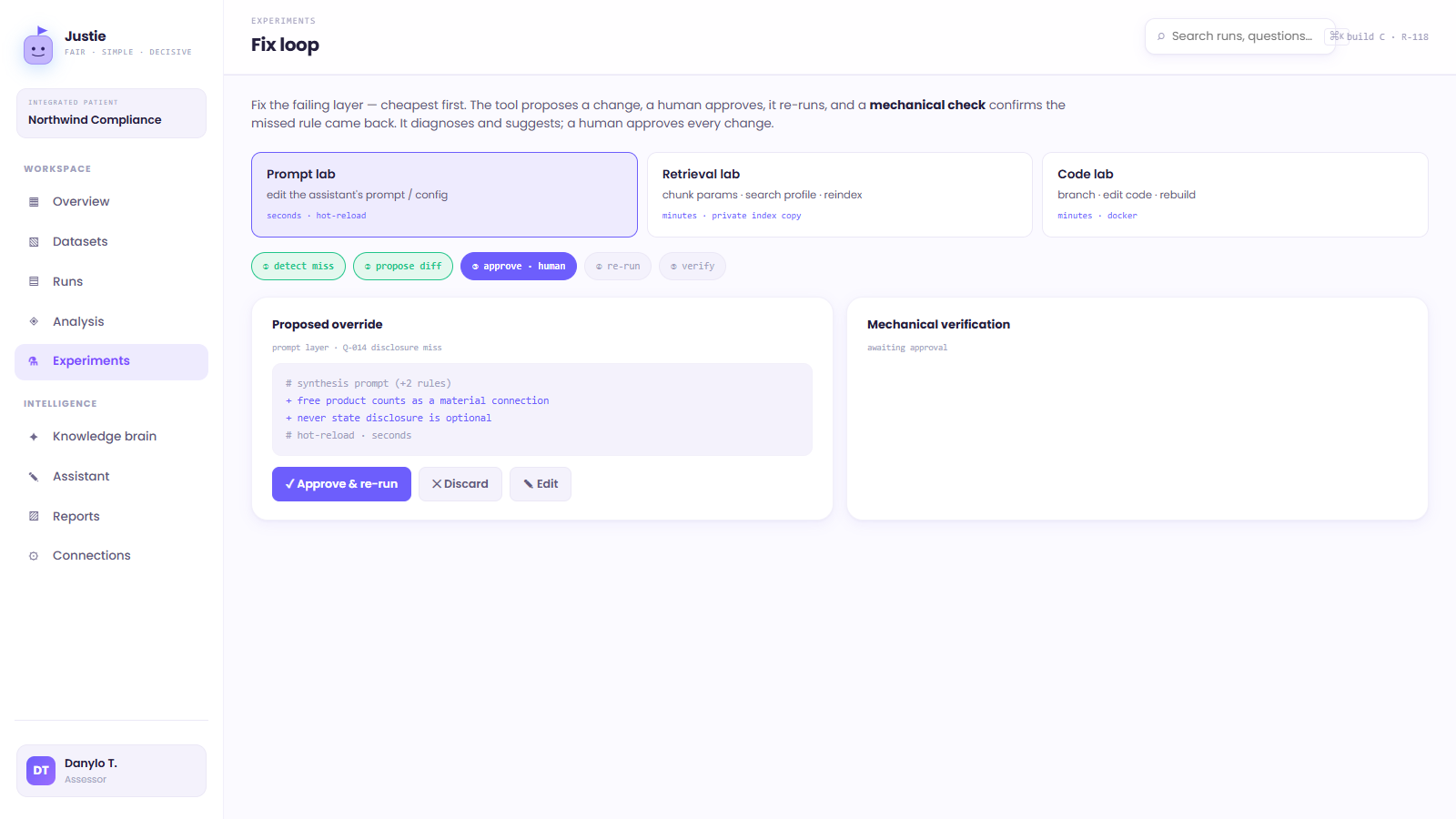
Measuring a score is the easy part. The value is attribution: is a failure a prompt problem, a retrieval problem, or a data/chunking problem? The machine surfaces retrieval defects with evidence diffs and coverage maps, so fixes target the cheapest effective layer — and then mechanically verifies the fix actually returned the missing behavior.
The result: it pinpointed retrieval and chunking — not prompts — as the dominant failure class, surfacing six distinct retrieval defects and redirecting the team away from prompt-tweaking toward the fixes that actually moved quality.
Interested in building something similar?
Let's Connect